Skylights & rooflights in Sheffield Chosen for the long run.
Roof lanterns, flat rooflights, roof windows and sun tunnels, installed and replaced across Sheffield and South Yorkshire. Free survey and fixed written quote.

A rooflight lasts for years. Its parts wear sooner.
We plan for both on the day we quote.
-

Seals and gaskets
They age with the weather, so we fit units whose seals can be renewed.
-
Motors and sensors
Electric units need parts you can still buy later.
-

Sealed glass units
A misted unit should come out without lifting the roof.







The life plan
Every written quote has one.
The unit
Named, sized and specified
What wears
Seals, motors and glass, listed
How it’s replaced
Without disturbing the roof

How it works
Survey
We look at the room and the roof, then quote in writing.
Install
Fitted, flashed and made good inside.
Sign-off
Building Control signed off and your guarantee issued.
The long read
The life of a rooflight in Sheffield
This is the life of one rooflight, from the day we stand in your loft with a tape measure to the day, decades later, when it is ready for replacement. Skylight installation or rooflight installation, skylight replacement or rooflight replacement: the decisions that count are made at the start. The years below are checkpoints, never dates when a part will fail.
Choosing: the types of rooflight and roof window, judged on how they age
Every type lets in daylight; the difference shows years later, in which parts wear and how easily they come out.
Start with the roof, not the brochure. A pitched roof takes a roof window, which sits in the slope between the rafters, close to the line of the slates or tiles. A flat roof takes a rooflight, standing on a raised kerb so rainwater runs off around it. A roof lantern is a rooflight with a pitched glass top, built for the flat roof over a kitchen extension or garden room. A sun tunnel is a small dome and a reflective tube that carries natural light down to a windowless landing or bathroom. Some write roof light as two words, and plenty call the lot a skylight.
Roof windows come in two main opening styles. A centre-pivot window turns on a hinge halfway down the sash, so you reach the handle at the top and swing the glass round to clean the outside from the room. A top-hung window hinges at the head and swings outward from the bottom, leaving the opening clear and the view open. It is also the style to consider for an escape window. On both, ask about the opening mechanism: hinges, stays and, on electric units, the motor and its chain.
| Type | Roof it suits | Opens? | Parts that move or wear |
|---|---|---|---|
| Centre-pivot roof window | Pitched, slate or tile | Yes, manual or electric | Hinge, seals, motor if fitted |
| Top-hung roof window | Pitched, slate or tile | Yes, outward from the bottom | Hinges, stays, seals |
| Fixed flat roof rooflight | Flat, on a kerb | No | Glass unit seal, gaskets |
| Opening flat roof rooflight | Flat, on a kerb | Yes, electric | Motor, rain sensor, seals |
| Roof lantern | Flat, on a kerb | Fixed, or with vents | Glass seals, vent motors |
| Walk-on rooflight | Flat roof used as a terrace | No | Seals, glass surface |
| Conservation rooflight | Pitched, older or protected house | Yes, manual | Hinges, seals |
| Sun tunnel | Pitched or flat | No | Dome, tube joints, diffuser |
Flat roof rooflights split into fixed and opening. A fixed unit has no moving parts, so its wear is limited to the glass, the seals and the joint with the kerb. An opening unit adds a motor, a rain sensor that shuts it when the weather turns, and a controller: welcome fresh air in a kitchen, and three more parts that will one day need replacing. Walk-on rooflights are laminated glass made to be stood on. Conservation rooflights sit low and flush in an old roof, with slim frames and often a central glazing bar in the manner of the cast-iron lights they stand in for.
When we lay options side by side, we ask three things of each. Can the wear parts still be bought from the maker? Can the glass unit be changed without disturbing the roof covering? Is the flashing a kit that can be lifted and refitted? A product that answers well on all three is one we are happy to supply and install for the long run.
Frames, finishes and glazing options
Once the type is settled, the specification is worth reading line by line. Roof window frames are timber, in a clear lacquer or a white moisture-resistant finish that suits a bathroom, or uPVC from some makers, with aluminium cladding outside, usually grey, and other colours to order on some ranges. Flat rooflights and lanterns mostly have aluminium frames, powder coated in a colour you choose. The glazing option does more for comfort than the frame: double or triple glazing, a solar control coating for a south-facing slope, a self-cleaning outer pane, and a laminated inner pane that holds together if it breaks. That laminated pane is a security point too, alongside a lockable handle, on any rooflight that can be reached from a flat roof or a low extension.
Survey: reading the roof, the room and the house around them
Booking a survey costs nothing and ends in a free quote, fixed and in writing, so what we find on the roof is what you pay for.
The survey is a close inspection, outside and in. Outside, we check the roof pitch, the covering, the battens and felt where we can see them, and anything that limits where a unit can go: a chimney stack, a valley, a party wall, a soil pipe. Inside, we look at the rafters from the loft or attic, measure the gaps between them and ask how the room will be used. A roof window that fits between existing rafters is the simplest job. One that needs a rafter cut and trimmed is structural work, planned and priced as such, with new trimmers carrying the load and the roof structure checked for the change.
Low-pitch roofs need care. Every roof window has a minimum pitch set by its maker, and on a shallow lean-to a rooflight on a built-up kerb can be the better answer. We would rather say so at the survey than after the first heavy rain.
Sheffield's housing stock, roof by roof
Sheffield is built on hills, and its roofs show it. The Victorian and Edwardian terrace streets climbing through Walkley, Crookes, Meersbrook and Heeley are red brick or gritstone, roofed largely in Welsh slate, with a back offshoot whose roof is lower and shallower than the main slope. Older cottages at the city's edge and out in the Peak villages carry heavy stone slates on stout timbers. The 1930s semis of the suburbs have clay or concrete tiles on hipped roofs, and the post-war estates brought simpler pitched roofs and, here and there, flat ones. Add the flat roof over a rear kitchen extension and the loft conversion, and you have the roofs this page is written for.
Each brings its own detail. Old Welsh slate can be brittle at the edges, so slates around the opening are stripped carefully and reused where they come off whole. Stone slates are thick and uneven, so the flashing has to cope with a deep, irregular profile. On a steep street, scaffold on the pavement needs a council licence, and we plan the timing around it. Access is part of the survey too: how the scaffold or a tower reaches the roof, and how a long glass unit gets through the house to the room below.
Areas we cover around Sheffield
We work across the city, from Hillsborough and Stannington to Darnall and Handsworth, and out to 30 road miles. That takes in the rest of South Yorkshire: Chapeltown and Stocksbridge, Rotherham to the north-east, Barnsley to the north and Doncaster further out. To the south it reaches Dronfield and Chesterfield, to the east Worksop and north Nottinghamshire, and to the west the Peak edge villages from Bradfield to Hathersage.
Planning permission and Building Regulations for rooflights in Sheffield
Planning decides whether you may change the roof, Building Regulations decide how the work is done, and both can apply to the same window.
Myth: Swapping an old rooflight for a new one is like for like, so the regulations do not come into it.
Fact: A replacement has to meet today's energy limits, not the standard the old unit was made to. That is why a replacement brings the glass up to date, and why we deal with the notification wherever the job needs one.
On a house, a roof window or rooflight can be fitted under permitted development, with no planning permission, if it meets a short set of conditions in Class C of the national permitted development order. It must not stick out more than 0.15 metres beyond the plane of the roof slope, and must not be higher than the highest part of the roof. A window in a side-facing slope must be obscure-glazed, and fixed shut unless the part that opens is more than 1.7 metres above the floor. A roof lantern stands well proud of its flat roof, so we check it against that limit before ordering. Flats and maisonettes do not have these rights.
Conservation areas, listed buildings and the Peak District
Sheffield has many conservation areas. A council can remove permitted development rights in one with an Article 4 direction, and directions differ in what they cover, so we read the one for your street before advising. If your house is listed, listed building consent is needed for work that affects its character, and a new opening in an old roof is that kind of work.
On the western edge of the city, the planning authority changes. Part of the Sheffield district lies inside the Peak District National Park, where the Peak District National Park Authority decides applications, and the same holds over the border in villages such as Hathersage and Castleton. There, a slim conservation rooflight sitting flush in the slope is where we would start. Outside the park, the council for your address decides.
Building Regulations: what a new or replacement unit must meet
Fitting or replacing a roof window or rooflight is building work under the Building Regulations, and the energy rules in Approved Document L apply. Table 4.2 of the 2021 edition for existing homes sets the limits: a roof window must reach a U-value of 1.4 W/m²K or a Window Energy Rating of Band B, and a rooflight a U-value of 2.2 W/m²K. We specify each unit to the figure that applies. Where the work is notifiable, we handle the Building Control notification, with the council or with a registered building control approver, the title private inspectors have carried since April 2024.
A roof window can be a means of escape, but only in the right place. Approved Document B counts an escape window only on a storey within 4.5 metres of the ground. So a roof window can serve a room in the roof of a bungalow or chalet bungalow, given a clear opening of at least 0.33 square metres and 450 millimetres each way, its bottom no higher than 1100 millimetres above the floor. A loft conversion on a two-storey house sits above that height, so escape depends on a protected stair. And England has no Building Regulations daylight requirement for houses: light is a reason, never a rule.
Fitting day: the installation process, from first slate to last seal
A good installation is mostly work you will never see again, which is exactly why it has to be right.
A roof window on a pitched roof goes in from outside. We strip the slates or tiles, cut the felt and, if the survey called for it, trim the rafters to form the opening. The frame is fixed with the maker's brackets, checked for square, and wrapped with an insulation collar and an underfelt collar tied into the existing felt. Then the flashing kit goes on and the covering goes back around it. Inside, the opening is lined with insulated reveals.
A flat roof rooflight follows a different order. The kerb comes first: a timber upstand, insulated, tall enough to keep the glass clear of standing water and snow. The roof covering is dressed up the sides of the kerb and over its top edge, so the weatherproofing runs unbroken. The rooflight or lantern then sits on the kerb on its own seal.
Flashing and the kerb: why they matter as much as the window
When a rooflight lets water in, look first at the joint between the unit and the roof, not the glass. On a pitched roof that joint is the flashing: shaped pieces that tuck under the slates above and lie over them below, steering water around the frame and keeping the joint watertight. A flashing kit made for the unit and the covering does this far better than lead dressed by eye, and our fitters work it into the slates as roofers, not as window fitters. On a flat roof the joint is the kerb, and the detail that counts is the turn of the membrane over its top.

- Kerb the raised frame on a flat roof that lifts a rooflight clear of the water, also called an upstand
- Flashing kit the factory-made set of pieces that seals a roof window into slates or tiles
- Trimmer a timber fixed across cut rafters to carry the load around a new opening
- Insulation collar a band of insulation round the frame that keeps the roof warm at the joint
- Making good putting the roof and the room back in order around the new work
This is where we think about year twenty on day one. We fit flashings and kerb details so they can be lifted and put back later without cutting into the roof around them, and we write down which kit went on. When the unit is eventually changed, the next installer finds a roof that opens up cleanly, with a record of how it was installed.
Year 1: natural light, ventilation and energy in the room
The first year shows what the rooflight is for: the light it brings, the fresh air it lets in and how the room holds its warmth.
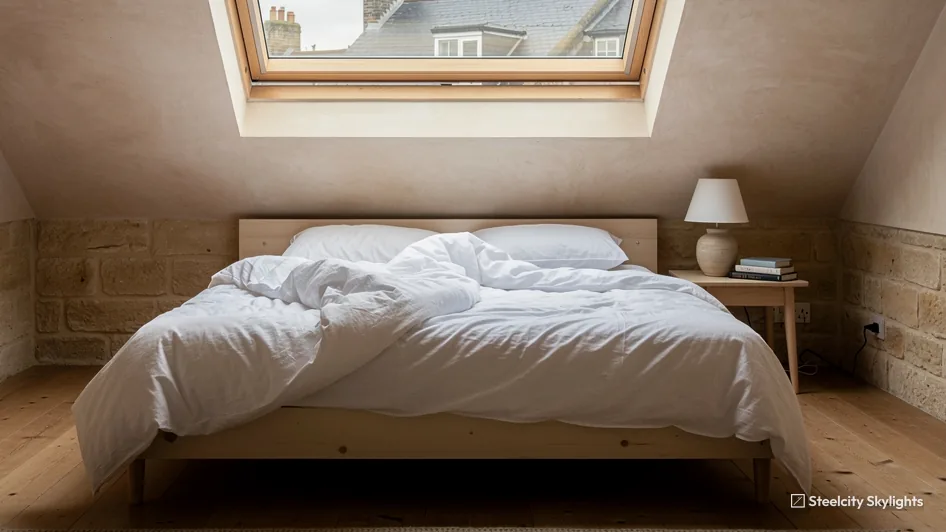
Light from above behaves differently from light through a wall. A roof window or rooflight puts daylight into the middle of the room, not just the floor beside a wall. You notice it first where it was dim: the back of a long terrace kitchen, or a landing with no window. Fewer hours with artificial lighting switched on is part of the gain, and a small part of the energy bills.
Fresh air is the second reason. An opening unit lets warm, damp air out at the highest point of the room, where it gathers, and even a narrow gap at the top sets up a steady airflow from the doors and windows below. In a bathroom or kitchen that matters, because moist air with nowhere to go settles as condensation on cold surfaces, then as damp and mould in the corners. A roof window can carry a ventilation flap that lets air through with the sash shut and locked, and an electric rooflight closes itself when the rain sensor feels the first drops.
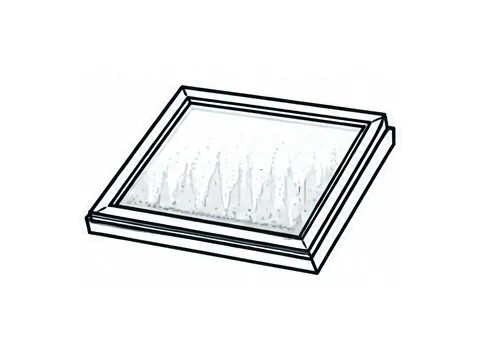
Myth: Condensation on a rooflight means the glass has failed.
Fact: Moisture on the room side of the glass is damp air meeting a cool surface, and better ventilation is the cure. Condensation between the panes, inside the sealed unit where no cloth can reach, is another matter: the edge seal of the glass unit has gone, and that unit needs replacing.
Then there is heat. Glass loses heat faster than an insulated roof, so every rooflight balances light against warmth, and the Part L limits keep that balance honest. A modern double glazing or triple glazed unit with a warm edge and a gas fill does far better than the single-glazed lights it may replace. An energy-efficient unit is only as good as its fit, though: the insulation collar and lined reveals are what stop heat loss and cold spots at the frame.
Year 5: the owner's maintenance, done from inside the room
Five years in, a rooflight asks very little of you, and nearly all of it can be done without going on the roof.
The maintenance a rooflight needs is mostly cleaning and looking. Leaves and moss gather at the top flashing of a roof window, especially under the big trees of Ecclesall or Nether Edge, and that piece keeps water off the head of the frame. A centre-pivot window turns so you can clean the outside glass and see that flashing from the room.
Moving parts like to be moved. Run an opening rooflight through its full travel now and then, and test that an electric unit closes on its own when the rain sensor is wet, following the maker's instructions. Note anything that changes, such as a stiff handle or a mark on the ceiling. Keep the life plan with the deeds, too: if you sell, the next owner knows what is on their roof and how it comes apart.
Year 10: how a flat rooflight ages, part by part
Ten years on, the frame and kerb should look much as they did; the question is the smaller parts that sit on them.
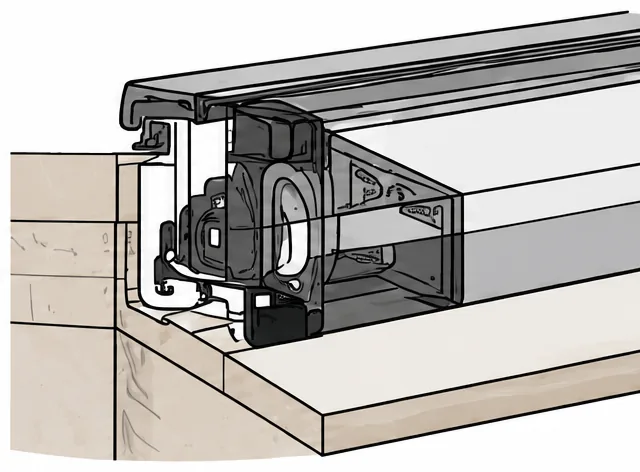
A rooflight is a long-lived thing built from parts that are not. The frame, the timber kerb and the membrane around it are made for long service. The rubber seals, the edge seal of the glass unit, the motor and the controller age with sun, frost and use. Nothing here promises when any part will give up. What we can say is which parts are the candidates, and the diagram marks them on a flat roof rooflight sitting on its kerb.
This is where the choice made at the start shows. A unit whose glass is held by a removable capping can have the glass lifted out from the top and a new unit bedded in, with the kerb and roof left alone. A unit whose glass is bonded into the frame at the factory has to come off whole, which can mean opening the membrane where it laps the kerb. And an electric unit whose maker has stopped supplying its motor may need a whole new rooflight for want of one part.
| What you notice | Likely part | How it is replaced | Roof disturbed? |
|---|---|---|---|
| Mist or droplets between the panes | Glass unit edge seal | New sealed glass unit | Not if the glass is removable |
| Draught or rattle at the sash | Weather seals | New seal set on the frame | No |
| Motor hums, sash stays put | Motor or chain | New motor of the same pattern | No, while the part is made |
| Rooflight stays open in rain | Rain sensor or controller | New sensor or control unit | No |
| Staining at the ceiling edge | Flashing or kerb seal | Flashing lifted and refitted, or new kerb seal | Locally, around the unit |
We cannot see the future of every maker's parts list. We can choose products from makers who sell spares, and record the part numbers in your life plan, so whoever does the work has them to hand. Ten years is also the length of our workmanship guarantee, counted from the day of fitting. The rooflight itself carries the manufacturer's product warranty, on that maker's own terms, which is separate from our guarantee; the plan records both. The life plan keeps being useful after they end.
The wear map
Five places a flat rooflight wears, and how each one comes out
Upstand seal
The seal between the rooflight frame and the kerb. Sun and frost age it first, so we fit units where it can be renewed without lifting the frame.
Glazing gasket
The rubber that holds the glass in the frame. On the units we choose, it can be swapped from above with the frame left in place.
Sealed glass unit
Two or three panes with a sealed edge. When that edge seal gives up, the unit mists between the panes. We pick frames where the glass unit comes out on its own.
Frame and kerb fixings
The screws or brackets that hold the frame to the upstand. We fix them where they can be reached and undone later, never buried under the roof covering.
Flashing and roof covering upstand
Where the membrane, felt or lead turns up the side of the kerb. We dress it so a future swap of the rooflight does not mean stripping the roof.
Year 20: signs a rooflight needs replacing, and how the replacement goes
A unit chosen and fitted with this day in mind comes out cleanly, and the new one goes into a roof that is ready for it.
Signs it is time for a replacement
Some signs are plain. Condensation between the panes that never clears means the glass unit has lost its seal, and where that glass cannot be changed on its own, the whole rooflight becomes the part. Water ingress shows as water tracking down the reveal or wall after heavy rain, or a leak that stains the plaster, and points to the flashing or kerb. Left alone, that water damage spreads into the timbers. On an old unit, a new rooflight with a new flashing kit is the sounder answer. Cracked glazing is a safety matter as well as a weather one. A jammed opening mechanism, an unobtainable motor or a warped frame can each turn a part swap into a full replacement.
How a rooflight replacement goes
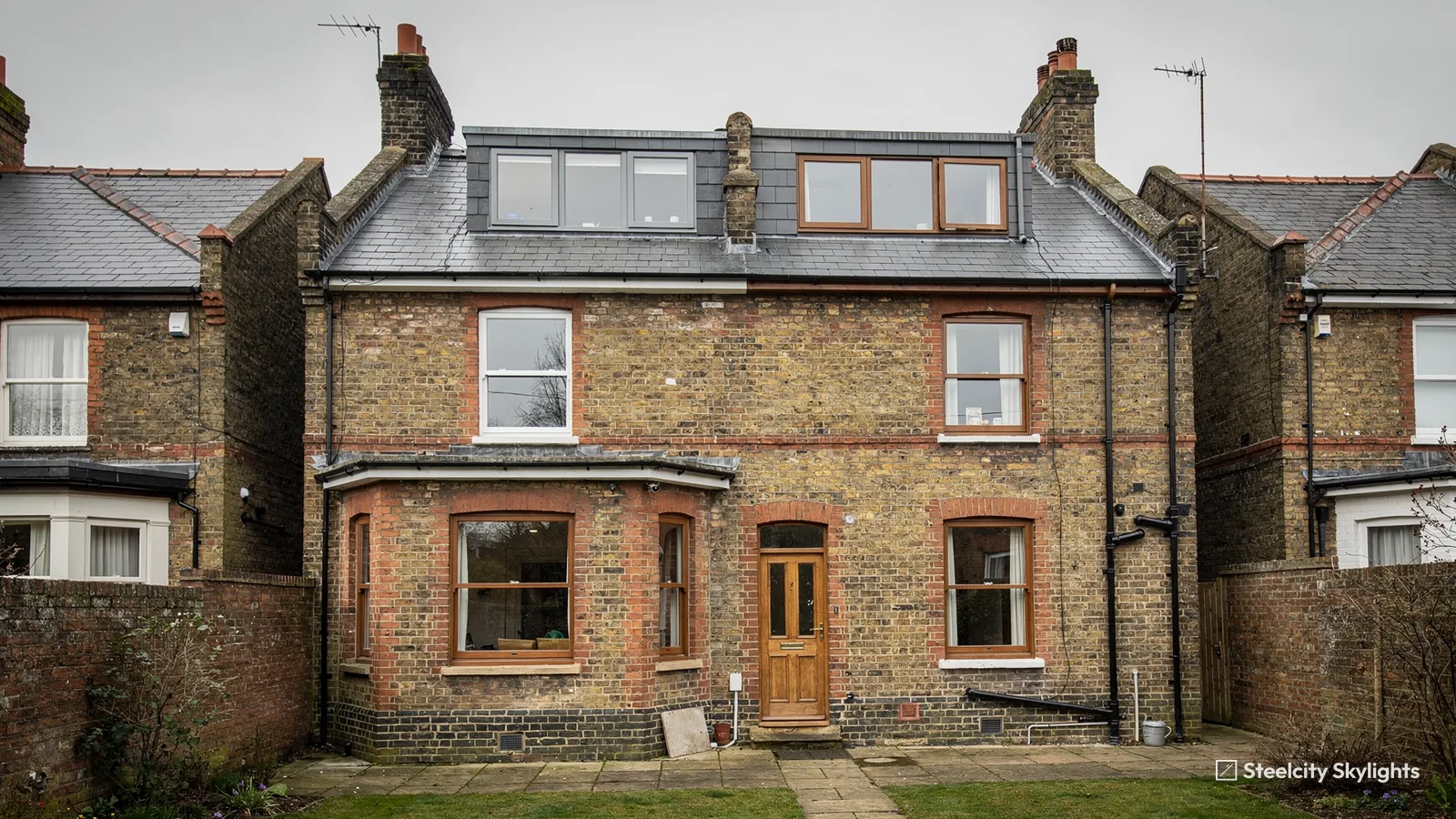
Replacement starts with the same survey as a new installation. On a pitched roof, a VELUX window carries a size code such as MK04, where the letter gives the width and the digits the height, and that code is the starting point for a new window to fit the same opening. On a flat roof, a sound kerb at the right height can stay; a short or soft one is rebuilt, because a new rooflight on a tired upstand only moves the weak point. Then the new unit is fitted, the inside made good and the notification dealt with where needed.
The new unit gets a life plan of its own, so whoever stands on that roof in twenty years finds a unit that comes out without a fight and a roofline as tidy as we left it.
Questions to settle before the survey
Do I need planning permission for a skylight in Sheffield?
On a house, a rooflight within 0.15 metres of the roof slope and below the ridge can go in under permitted development. Flats, listed buildings and Article 4 areas are different, and inside the national park the Park Authority decides. We check your address before we quote.
Can a roof window go into a stone-slate roof?
Yes. The stone slates around the opening are lifted, set aside and relaid, and the flashing is chosen for their depth and uneven edges. In an older house we would also show you a conservation rooflight, which sits lower in the slope.
Can a misted glass unit be changed without replacing the whole rooflight?
On some designs, yes: the glass is held by a capping or bead and comes out on its own. On others it is bonded into the frame and the unit is replaced whole. Your life plan records which kind you have.
What is the life plan that comes with the quote?
A short sheet naming the unit and its size, the parts that will wear, and how each one is changed later, including whether the roof has to be opened to do it.
What does the guarantee cover?
Our workmanship guarantee runs for ten years from the day the unit is fitted and covers the installation work we carry out. The unit and its parts come with the manufacturer's warranty, on the maker's terms. The life plan sits alongside both and stays useful after it ends.
Do you work outside Sheffield?
Yes, to 30 road miles: Rotherham, Barnsley and Doncaster in South Yorkshire, Dronfield and Chesterfield to the south, Worksop and north Nottinghamshire, and the Peak edge villages to the west.